Well, I have been involved in the SEO industry for quite some time now, and here’s what I’ve realized about our work. The methods and tools used by us to track and report our results change every year.
And each year there seems to be some new method or tool which is hailed as the next big thing. Well, for 2026, it is quite evident that ranking alone will not cut it. It is essential to get smarter about tracking our success in an era where artificial intelligence has revolutionized SEO.
Key Takeaways
- Focus on metrics that directly tie to business goals, like revenue and qualified leads, rather than just traffic or rankings.
- In 2026, it’s vital to track new metrics like AI overview visibility and GEO visibility to understand how AI is impacting search.
- Setting up a robust tracking framework involves connecting tools like Google Search Console and GA4, defining clear goals, and establishing a regular reporting schedule.
- Building custom dashboards, especially in tools like Google Looker Studio, helps present complex data in a clear, understandable way for stakeholders.
- Understanding attribution models is key to showing SEO’s full impact, including its role in assisted conversions, not just last-click wins.
What Is SEO Analytics and Reporting?

Well, you are putting effort into making your website appear on search engines, but how do you know whether it is working or not? Here comes SEO analytics and reporting – your compass in the sea of search engines.
Using the right analytics platforms and the best free SEO tools can help you understand exactly what’s working and where your SEO strategy needs improvement.
I used to speculate about ways to increase my website ranking, which was quite a waste of time. Now, I analyze the data. It is not only important to see whether your website appears in results for several specific keywords, but it is also essential to take into account other factors, such as:
- How many people are actually finding your site through search engines.
- Whether those visitors are sticking around or bouncing off immediately.
- If the people coming from search are actually doing what you want them to do, like signing up for a newsletter or buying something.
- How your site is performing technically, which search engines really care about.
This is because without the information, you are in essence operating blindfolded. The actions that you believe to be correct might in fact end up being detrimental to your performance. This is where wise decision-making comes into play.
The real goal of SEO analytics and reporting is to connect your search engine efforts directly to what matters for your business, like sales or leads. It’s the bridge between your website’s visibility and its actual contribution to your company’s success.
It will help you find answers to some of the major questions such as: Are our SEO efforts generating any revenue? What areas must we invest in in order to achieve optimal results?
Understanding the basic functionality of your SEO reporting software can have an immensely positive impact on the effectiveness with which you can develop and manage your website.
It is the difference between wishing for success and being sure that you are on the right path. It is crucial in assessing your SEO efforts and monitoring numbers.
Key SEO Metrics You Must Track in 2026

So you’re doing your bit for SEO, but how can you tell whether it’s working? There’s always a risk of getting overwhelmed by the numbers, but what I’ve learned is that concentrating on a few key figures makes all the difference. And it’s not just about making yourself look good; it’s about getting results.
Organic Traffic – The Foundation Metric
This one is relatively simple; how many visitors to your website have come via the search engines? This is fundamental to your SEO efforts. If this figure is not increasing, there might be a problem with your approach.
The first thing I always do is look at the trends over the past 90 days. Is there a steady upward trend or does it remain stagnant?
Keyword Rankings and SERP Visibility
Of course, knowing your ranking for particular keywords matters, but that’s no longer enough. A strong keyword strategy combined with effective semantic SEO writing helps search engines better understand your topical relevance.
That’s why businesses should also follow modern keyword research tips for small businesses instead of focusing only on exact-match keywords.
In other words, it involves taking into account not only the position but also the frequency with which you appear in various types of search result snippets, such as the little boxes with quick answers or “People Also Ask.”
Click-Through Rate (CTR) and Impressions
Impressions will show you how often your page appeared in the search results. CTR will show you how often your listing was clicked upon.
If you have a lot of impressions but a low CTR, that could indicate that your title tag and meta description weren’t enticing enough.
Improving CTR can often generate better results without increasing rankings, which is why many businesses compare SEO vs PPC strategies when trying to improve online visibility and conversions.
Bounce Rate and Dwell Time
What happens once someone lands on your page? The bounce rate is the rate of visitors who leave without looking at anything other than that one page. The dwell time is the amount of time they spend there.
A high bounce rate or low dwell time may suggest that you aren’t addressing the intent behind the search or that something about the page is off.
Backlink Profile Growth
Backlinks are still one of the key ranking factors. Building high-quality backlinks consistently is one of the reasons businesses invest in affordable SEO services for small businesses to improve authority, rankings, and long-term organic growth.
Core Web Vitals and Technical Health Score
Your website must be quick and user-friendly. The Core Web Vitals, such as Largest Contentful Paint, First Input Delay, and Cumulative Layout Shift, are some of the measures by which Google determines this.
Poor results here may negatively affect your search engine ranking regardless of the quality of your content. Following proper technical SEO best practices can help improve Core Web Vitals, site speed, crawlability, and overall user experience.
Conversion Rate From Organic Traffic
This is where SEO meets its monetary purpose. SEO success is not just about traffic; it’s about generating qualified leads and revenue. Businesses focused on plumbing lead generation or learning how to get more roofing leads often rely heavily on organic conversion tracking to measure real SEO ROI.
AI Overview and GEO Visibility Metrics (New in 2026)
Since AI-generated answers are becoming increasingly common, businesses should focus on creating semantically rich content using smart workflows and modern AI tools for content writing.
Combining AI-assisted workflows with effective semantic SEO strategies can improve visibility in AI Overviews and generative search experiences.
Another aspect gaining importance is GEO visibility, or how well your business appears in location-based searches.
Understanding modern local SEO ranking factors and following a complete local SEO checklist can significantly improve local search performance. Optimizing your Google Business Profile is also essential for improving visibility in Google Maps and local search results.
Measuring SEO effectively means looking beyond simple rankings. It’s about understanding the entire user journey, from the first impression in search results to the final conversion, and adapting to new search technologies like AI overviews. My focus is always on connecting these metrics back to tangible business outcomes, proving that SEO isn’t just a cost center, but a revenue driver.
SEO Metrics You Should Stop Tracking
Now let’s move on to those SEO metrics that I will no longer be using in 2016. While it is tempting to track all the data, there are certain metrics that can mislead you. They don’t give you a true picture and can actually misdirect you.
These are some of the things I am going to stop measuring:
- Total Organic Traffic as a Standalone Number: While looking at a big number as a metric may seem impressive, does it mean anything? Is it traffic of good quality? Are they really interested in my product or service, or do they click away after the first second? Instead, I would prefer to see organic traffic related to some specific goal or conversion. For instance, a 20% increase in “Website Sessions” means nothing when all these visits are from bots or low-quality researchers who will never buy.
- Individual Keyword Rankings (in isolation): Although I still keep track of ranking positions, I stopped paying attention to every single one. The search environment changes rapidly and Google’s algorithms get smarter and smarter. Now it’s much more important to think in terms of topic clusters and overall SERP visibility of a particular theme rather than aiming to rank #1 for each keyword individually.
- Vanity Metrics Without Context: Metrics such as total impressions or a very large number of page views for a blog post which does not result in any conversion. These metrics may sound impressive when looked at individually, but they do not tell me whether my efforts with SEO are adding value to the company.
The goal isn’t to track every single data point available. It’s about focusing on the metrics that directly influence business outcomes and provide actionable insights. If a metric doesn’t help me make a better decision or prove value, it’s probably time to let it go. This helps me refine my tracking to align with evolving SEO best practices and achieve more effective results, moving beyond tracking organic traffic and total impressions as standalone metrics.
How to Set Up Your SEO Analytics Framework

Well, you have implemented your SEO strategy, but the question is, how do you really know if it works? This is when the need for an effective analytical framework arises.
It is not only about analyzing figures but interpreting them in context with your business needs. In my experience, the lack of an effective framework results in either getting lost in the sea of data or simply making assumptions.
Step 1 – Define Your SEO Goals and KPIs
What do we want to accomplish with SEO? Businesses also need to decide how SEO fits into their broader digital marketing strategy. Many companies compare SEO vs social media marketing or evaluate SEO vs PPC campaigns when setting long-term growth goals.
For instance, if my business involves lead generation, my primary SEO goal will be to boost organic leads. On the other hand, if my website is an e-commerce platform, my primary SEO goal will be to increase organic revenues.
After determining the primary goals, I then identify 3-5 KPIs which will help us achieve them. Some of these may include the amount of organic traffic, organic conversion rate, and organic revenues. It is vital to set concrete targets for our KPIs, such as increasing organic traffic by 15% within the next six months.
Setting clear, measurable goals is the first step to proving SEO’s value. Without them, you’re just collecting data without a purpose, making it impossible to know if your efforts are truly moving the needle.
Step 2 – Connect Google Search Console and GA4
The use of these two tools can be compared to the backbone of SEO analytics. The Google Search Console provides information about how Google perceives your website, what kind of queries lead traffic to your site, and how often your pages appear.
The first thing that I do before starting work on the website is to verify my site ownership in Google Search Console. It is a relatively easy procedure.
Afterward, I integrate it with Google Analytics 4. Integration with Google Analytics 4 is crucial as it helps to pull GSC data directly into GA4. In this way, it becomes possible to get information regarding which keywords lead to traffic and conversions.
Step 3 – Set Up Conversion and Goal Tracking
Just getting traffic isn’t enough, right? We need that traffic to do something. This is where setting up conversion tracking is vital. In GA4, this means defining what a
How to Create an SEO Dashboard in Google Looker Studio
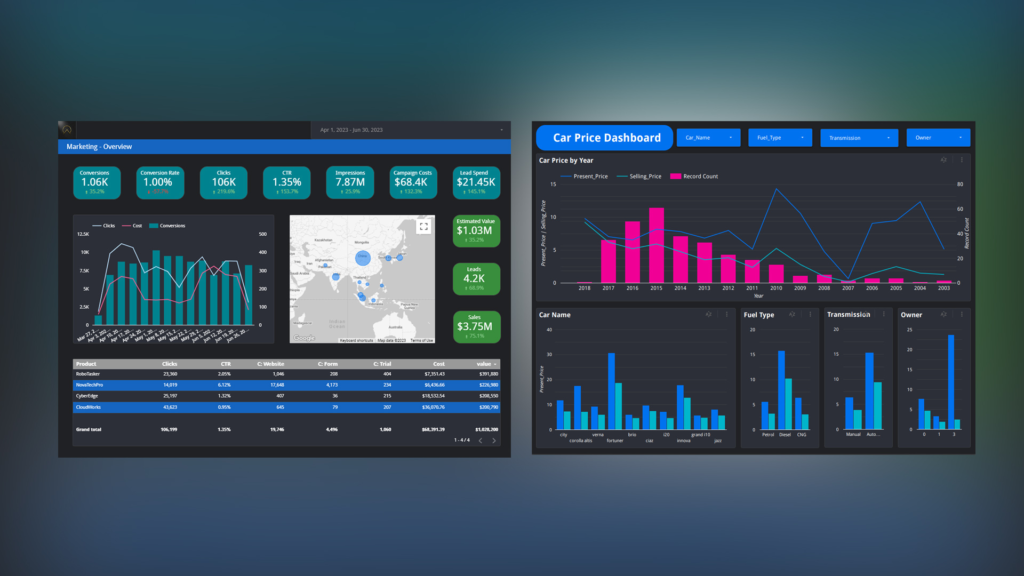
Okay, now that we have all our SEO objectives and KPIs nailed down, it’s time to bring them together into one dashboard.
Combined with other free SEO tools, it becomes much easier to monitor rankings, conversions, and overall SEO performance from one dashboard.
This is how I typically tackle the process of creating a dashboard:
- Pick Your Data Sources: The first thing you need to do is connect your data sources. In the case of SEO, it’s going to be GA4 and Google Search Console. Connecting both data sources in Looker Studio is easy.
- Choose Your Metrics (and Keep it Simple!): This is the part where you select the metrics you are going to track. Remember, there is no need to go all out and add all possible metrics to one dashboard. That would just result in a bunch of numbers you won’t even be able to analyze.
- Build Your Visualizations: After setting up your connections, you’ll begin creating visualizations. Line charts are a great choice if you want to analyze trends over time, such as organic traffic on a monthly basis.
- Add Context: A number alone does not speak for itself. What if I tell you that your organic traffic has increased? Is this a positive change? By what percentage? I always include comparison metrics. Therefore, rather than simply saying ‘10,000 organic sessions’, I would write ‘10,000 organic sessions (+15%) compared to last month.
The goal here isn’t to create a data dump. It’s to build a tool that helps you and your team quickly see what’s working, what’s not, and where you need to focus your efforts. A good dashboard should answer your main questions about SEO performance in under two minutes. If it takes longer, it’s probably too complicated.
Wrapping It Up
That’s basically it. So we’ve covered the ways to make sense of all that data, not just stare blankly at some fancy figures that mean nothing in the long run.
It’s not about owning the most advanced technologies; it’s all about setting everything up properly right from the beginning and asking yourself some hard questions when it comes to the data analysis.
No, no, perfect tracking is impossible, but getting that high-quality and compliant data that allows you to make more informed decisions is definitely possible. And by putting the focus where it should be put – such as measuring your SEO success in terms of ROI – you will finally be able to see results for your efforts.
Frequently Asked Questions
Why is tracking SEO important for my business?
I track SEO because it shows me how many people find my website through search engines like Google. This helps me understand if my website is showing up when people look for things I offer. It’s like knowing how many people walk past my store versus how many actually come in.
What are the most important numbers to watch for SEO in 2026?
I focus on numbers like how much traffic comes from search engines, where my website ranks for important words, and if those visitors actually do what I want them to, like buying something or signing up. New things like how often my site shows up in AI answers are also becoming super important.
Should I still track old SEO metrics?
Honestly, some old numbers aren’t as helpful anymore. Things like just looking at how many people visit without knowing if they’re real customers or just clicking around randomly isn’t useful. I try to focus on what actually brings in money or leads, not just activity.
How do I set up my tracking system?
First, I figure out what I want SEO to achieve for my business, like getting more sales. Then, I make sure my main tools, like Google Search Console and Google Analytics, are connected and set up right. I also make sure I can see when people actually become customers or do something valuable on my site.
What’s the best way to show my SEO results?
I create a simple dashboard that shows the most important numbers at a glance. This way, I don’t have to dig through tons of data every time. It helps me see what’s working and what’s not, and I can easily share these easy-to-understand results with others.
Is it possible to track everything perfectly?
No, nothing is ever 100% perfect. Some people talk about things online that I can’t always see, like in private chats. But the goal isn’t perfection; it’s getting good enough data to make smart choices that help my business do better than others. Being mostly right and safe with data is way better than risking big problems with perfect but risky data.